

Open uping Your Income Potential with Affiliate Marketing
If you're looking to affiliate marketing earn money, this guide will show you how. Affiliate marketing is a powerful way to earn commissions by promoting products or services from other companies.
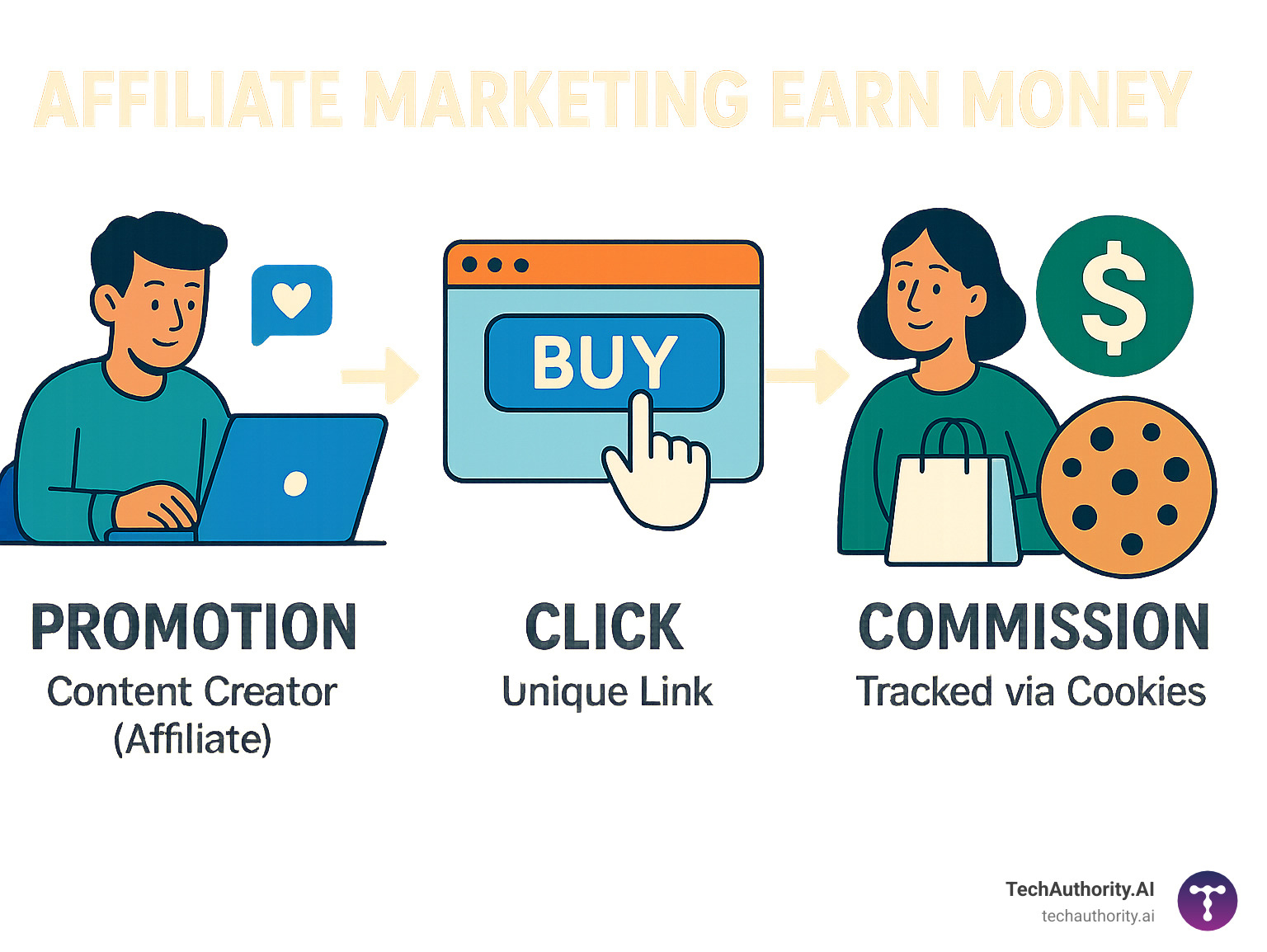
Here's how it works:
- Promotion: An affiliate promotes a product or service using a unique link.
- Tracking: When a user clicks this link, their activity is tracked, usually with a cookie.
- Purchase: If the user makes a qualifying purchase within a set time, the sale is recorded.
- Commission: The affiliate earns a commission on that sale.
Imagine earning money while traveling or even sleeping! That's the promise of affiliate marketing. It's a legitimate, performance-based way to build an online income stream. The industry is booming, with global spending around $14 billion in 2023 and projected to hit $12 billion in the US by 2025.
At TechAuthority.AI, we've helped countless entrepreneurs affiliate marketing earn money by providing expert guides on building effective websites and marketing campaigns.
Quick affiliate marketing earn money definitions:
What Is Affiliate Marketing and How Does It Work?
Affiliate marketing is a performance-based strategy where you earn a commission for promoting another company’s products. It spreads marketing responsibilities across multiple parties, creating a system where everyone benefits.
The process is simple. As an affiliate, you drive sales or leads to a merchant's website through your unique affiliate link and receive a commission. You don't need to create products, handle inventory, or manage customer service. Your focus is on connecting consumers with products.
There are four key players in the affiliate marketing landscape:
- The Merchant (or Seller/Product Creator): The company or individual who creates the product or service. Their goal is to sell products, and they use affiliates to expand their reach.
- The Affiliate (or Publisher): That's you! The marketer who promotes the merchant's products through channels like blogs, social media, or email lists. Your role is to persuade customers and direct them to the merchant's site.
- The Consumer: The individuals who buy the product. You provide them with valuable information to guide their purchasing decisions.
- The Affiliate Network: An intermediary that facilitates the relationship between merchants and affiliates. These platforms host affiliate programs, handle tracking and payments, and provide helpful tools.
The process starts when you sign up for a program and get a unique affiliate link. This link contains tracking info. When a customer clicks it, a cookie is placed on their browser. If they make a purchase within the cookie duration (which can range from hours to months), you earn a commission.
Modern tracking tools use advanced attribution models to ensure you get credit. They can track multiple touchpoints in the customer journey.
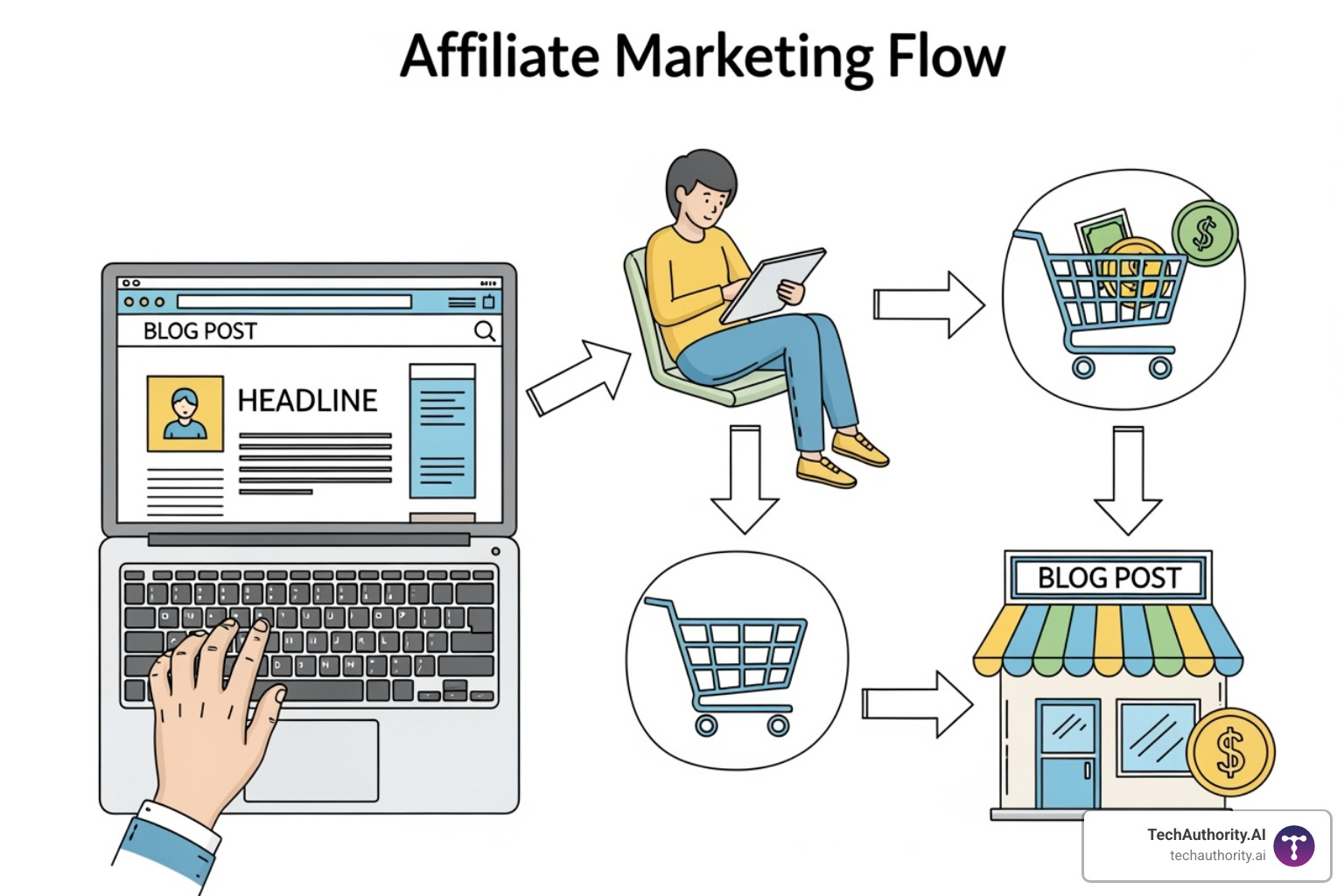
How Do Affiliate Marketers Earn Money?
The ways you can affiliate marketing earn money vary depending on the program. Here are the most common payment models:
- Pay-Per-Sale (PPS): The most common model. You earn a percentage of the sale price when a customer buys through your link. Commissions can range from 5% to 50%, with rates varying based on the product type.
- Pay-Per-Lead (PPL): You earn a commission for generating a qualified lead, such as a customer signing up for a free trial, filling out a contact form, or subscribing to an email list. This model is common for services or software where lead nurturing is key.
- Pay-Per-Click (PPC): Less common, some programs pay for driving traffic to the merchant's site, regardless of sales. This model focuses on brand exposure. You get paid for the clicks you generate.
The Realistic Earning Potential of Affiliate Marketing
Affiliate marketing isn't a get-rich-quick scheme. While earning passive income is achievable, success requires strategy, consistent effort, and patience. It takes dedication and hard work to earn a significant income.
Income statistics paint a clear picture. Many affiliates start small, with some studies showing over half earning less than $10,000 a year. This highlights the competitive nature of the field. However, the potential for high earnings is real. Other reports indicate that over 10% of affiliates earn more than $100,000 annually, proving that substantial income is achievable for dedicated marketers.
Your earnings often grow with your experience and effort.
- Entry-level (0-1 year): Earning $500 to $2,000 per month is a common starting point. This phase is for learning, experimenting, and building foundational assets.
- Intermediate (1-3 years): With refined strategies and a larger audience, income can grow to $2,000 to $10,000 per month.
- Experienced (3+ years): Those who apply best practices and have a loyal audience can earn $10,000 to $50,000+ per month. Some “super affiliates” earn six or seven figures annually. The median annual salary for an affiliate marketer is around $64,000.
Inspiring success stories show what's possible. Some top affiliates publicly share their income reports, showing earnings of over $100,000 in a single month or rapid growth from $20K to over $150K in annual income within a couple of years. These examples are motivating, but they highlight a key truth: such results come from years of building authority, driving traffic, and cultivating audience trust.

Learning how to affiliate marketing earn money is a long-term investment. You don't need a large budget to start, but you do need time, consistency, and a willingness to learn and adapt.
How to Start and Succeed with Affiliate Marketing to Earn Money
Let's explore how to affiliate marketing earn money. Starting this journey requires a clear, structured approach. Here's our step-by-step guide to building a sustainable income.
Step 1: Choose a Profitable Niche
Choosing the right niche is a critical first step. It should be a balance between your passion and market demand. Ensure there's an audience willing to spend money in that area.
To choose wisely, confirm there is audience demand. Use keyword research tools to find terms with good search volume and manageable competition. This research will guide your content strategy. Analyze the competition; some competition indicates a viable market. Find a unique angle to stand out. It's often said that a small percentage of affiliates drive the majority of conversions, so choosing a specialized niche can boost your chances of success.
Popular profitable niches include Technology (software, gadgets), Personal Finance (investing, credit cards), Health & Wellness (fitness, nutrition), and Hobbies (gaming, photography, pet care).
Step 2: Select Your Platform
With your niche chosen, select a platform to publish content and promote links. Choose one where you're comfortable creating and where your target audience is active.
- Blogging is perfect for in-depth reviews, comparisons, and how-to guides. A well-optimized blog can rank on search engines for years, bringing in consistent, free traffic.
- YouTube is excellent for product reviews, tutorials, and unboxing videos. Video content is highly engaging and builds trust quickly.
- Social Media platforms like Instagram and TikTok are ideal for visual content and quick recommendations, using short-form videos and link-in-bio tools.
- Email Marketing is crucial for long-term success. It provides direct access to your audience, bypassing social media algorithms. Email is a powerful tool for nurturing leads and promoting offers.
Step 3: Find and Join Affiliate Programs
Now, find the products you'll promote. Choosing the right affiliate programs is key to helping you affiliate marketing earn money.
You can find opportunities through affiliate networks, which are marketplaces for affiliate programs. Large affiliate networks act as marketplaces for thousands of affiliate programs, and they handle tracking, payments, and provide useful tools. Alternatively, many brands run their own direct programs. If you love a product, check its website footer for an “Affiliates” or “Partners” link.
When evaluating programs, consider these factors:
- Fair and competitive commission rates.
- A long cookie duration to credit you for delayed purchases.
- A trustworthy brand reputation to protect your own credibility.
- Product relevance to your niche and audience needs.
Step 4: Create High-Value, Engaging Content
Your content must be helpful and compelling, not just a sales pitch. Focus on helping, not selling. Provide solutions, answer questions, and offer genuine insights. Authenticity is key; without trust, your audience won't buy.
Effective content types include:
- Product Reviews: Detailed, honest assessments of products you've used. Share both good and bad experiences to build trust.
- Comparison Posts: Compare similar products, highlighting pros and cons to help readers choose.
- “How-to” Guides: Demonstrate how to use a product or solve a problem with it. This positions you as an expert.
Follow SEO best practices. Use keyword optimization naturally. Ensure a great user experience with readable, well-formatted, and visually appealing content. Finally, make sure your site is mobile-friendly.

Step 5: Build an Audience and Drive Traffic
Great content is useless without an audience. Driving traffic is essential to affiliate marketing earn money.
- Focus on SEO for long-term organic traffic. It's a marathon, not a sprint, but it provides a steady stream of relevant visitors.
- For faster results, use Paid Advertising (PPC). Google Ads or social media ads can drive targeted traffic quickly but require a budget and strategy.
- Use Social Media to engage with your audience, share content, and participate in relevant communities to gain visibility.
- Build an email list by offering lead magnets like free e-books or checklists. Send valuable newsletters with affiliate recommendations to your most engaged audience.
Key Strategies to Maximize Your Affiliate Income
Once you have the basics down, it's time to use advanced strategies to maximize your affiliate income. It's all about fine-tuning your approach.
How to effectively affiliate marketing earn money with advanced tactics
Refine your approach with conversion optimization. This means improving the percentage of visitors who click your links and buy. Use A/B testing to test small changes like headlines or button colors to see what works best.
Building audience trust is your key to long-term success. Only promote products you genuinely believe in. Be transparent about your affiliate relationships to build a loyal following that trusts your recommendations.
Leverage bonuses by offering extra value to those who buy through your link. A free e-book or exclusive content can significantly boost conversion rates.
Diversify your income streams. Don't rely on a single merchant. Major programs have been known to slash commission rates unexpectedly, so spreading your partnerships across different merchants provides more stability.
Analyze performance data using your affiliate dashboard and analytics. Track which content and products convert best and where your traffic comes from. Use this data to refine your strategy and focus on what works.
The pros and cons of trying to affiliate marketing earn money
Like any business, affiliate marketing has benefits and challenges.
| Benefits | Challenges |
|---|---|
| Low Startup Cost Free to join most programs. No need to create products, handle inventory, or manage shipping. |
Inconsistent Income Earnings can be unpredictable, especially at the start. It takes time to build a steady income. |
| Flexibility Work from anywhere, on your own schedule. Choose products that align with your interests. |
Requires Patience Building an audience and generating significant income takes time, consistency, and patience. |
| Passive Income Potential Content can earn commissions for months or years, creating a passive income stream. |
Dependent on Merchant Rules Income can be affected by factors outside your control, like changes to a merchant's program terms or commission rates. |
| No Product Creation/Customer Service Focus on marketing, not product development, inventory, shipping, or customer support. |
Competition The field is competitive. You must work hard to stand out and offer unique value. |
Legal and Ethical Considerations for Affiliates
To build a successful, long-term affiliate business, you must operate ethically and legally. Trust is the foundation of your reputation and sustainability.
First, transparency is essential. The Federal Trade Commission (FTC) requires you to disclose affiliate relationships. Your disclosure must be clear and conspicuous, placed near the affiliate link itself so your audience can't miss it. The FTC offers clear guidance on this. Being upfront builds trust.
You must also comply with data privacy laws like GDPR in Europe and CCPA in the US. If your site collects user data (e.g., through email sign-ups or analytics), you need a clear privacy policy. This policy should explain what data you collect and how you use it. Compliance is a legal necessity that helps maintain user trust.
Finally, maintain authenticity. Beyond legal requirements, only promote products you genuinely believe provide value. Recommending low-quality products for a quick commission will damage your credibility. Upholding your audience's trust by promoting quality products is the best strategy for sustainable growth when you affiliate marketing earn money.
Frequently Asked Questions about Earning with Affiliate Marketing
Let's address some common questions about affiliate marketing.
Is affiliate marketing still profitable?
Yes, absolutely. The industry is still growing, with spending in the US alone projected to reach $12 billion by 2025. This growth shows that brands continue to see value in affiliate partnerships. Your success depends on providing genuine value, creating high-quality content, and building trust with your audience. There is plenty of opportunity to earn a substantial income.
How long does it take to start earning money?
The timeline varies. While some see commissions within weeks, it realistically takes a few months to a year to see consistent income. Factors like your niche, strategy, content quality, and traffic generation efforts all play a role. Building an audience and authority takes time and patience, but the rewards can be significant.
Do I need a website to be an affiliate marketer?
While not strictly necessary—you can use social media or YouTube—a website is highly recommended for a sustainable, long-term business. A website is a digital asset you own and control. It's the ideal platform for in-depth content that builds trust and authority. It also allows for better SEO, attracting consistent organic traffic. Unlike social media platforms with their changing algorithms, your website provides a stable foundation for your business.
Conclusion: Start Your Affiliate Marketing Journey Today
We've covered what affiliate marketing is, its earning potential, a step-by-step guide to success, and the crucial legal and ethical considerations.
The key takeaway is that affiliate marketing is a legitimate, performance-based business model with incredible potential. It allows you to affiliate marketing earn money by connecting people with products they need.
It's not a get-rich-quick scheme. Success requires patience, a solid strategy, and a commitment to providing value. With these, you can build a thriving online income stream and transition from a content creator to a savvy business owner.
Here at TechAuthority.AI, we empower you on this journey. We provide expert guides and resources on WordPress development, managed hosting, and digital marketing strategies. Our mission is to help entrepreneurs and agencies master WordPress and grow their online businesses with actionable, expert-driven content.
If you're ready to start your affiliate marketing journey, there's no better time than now. We're here to provide the tools you need. Dive deeper into our WordPress guides and resources to get started.